YEAR 2024
In 2024, the NGO APDD implemented the “Art Deco Women’s Leadership (LFAD)” project to train 25 vulnerable young single mothers from Abomey-Calavi in decorative arts, visual arts, and digital arts. This initiative empowered single mothers, promoted female leadership, and contributed to reducing gender inequalities.In parallel, APDD supported more than 400 vulnerable schoolchildren in Yêvié and Zinvié Centre by providing essential school supplies, and assisted disaster victims in Ahomey-Lokpo in rebuilding their homes following a devastating fire.The EcoTomato project in Wawata introduced organic tomato farming combined with automated irrigation systems, training women farmers and strengthening their economic empowerment and autonomy.These initiatives reflect APDD’s strong commitment to social inclusion, education, and sustainable development.
Art Deco Women’s Leadership (LFAD)
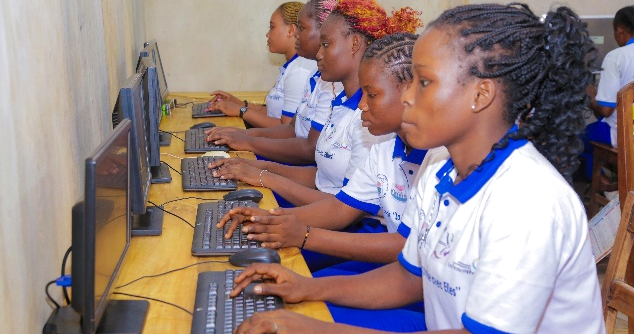
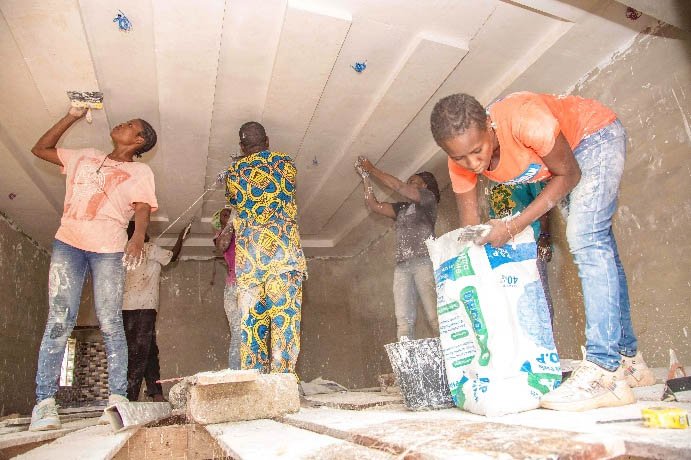
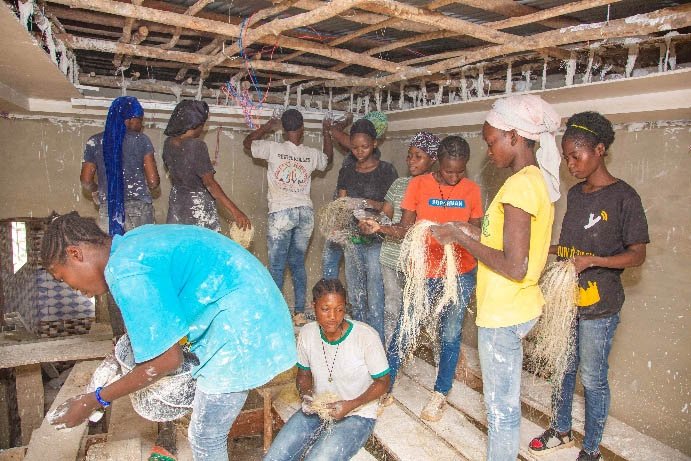
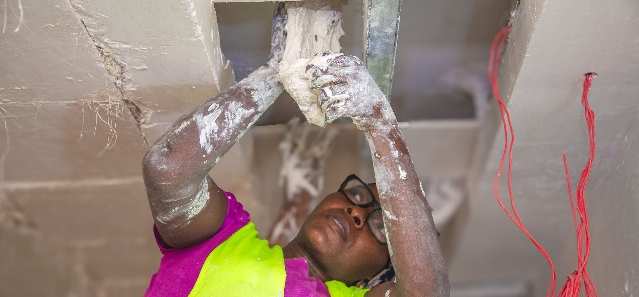
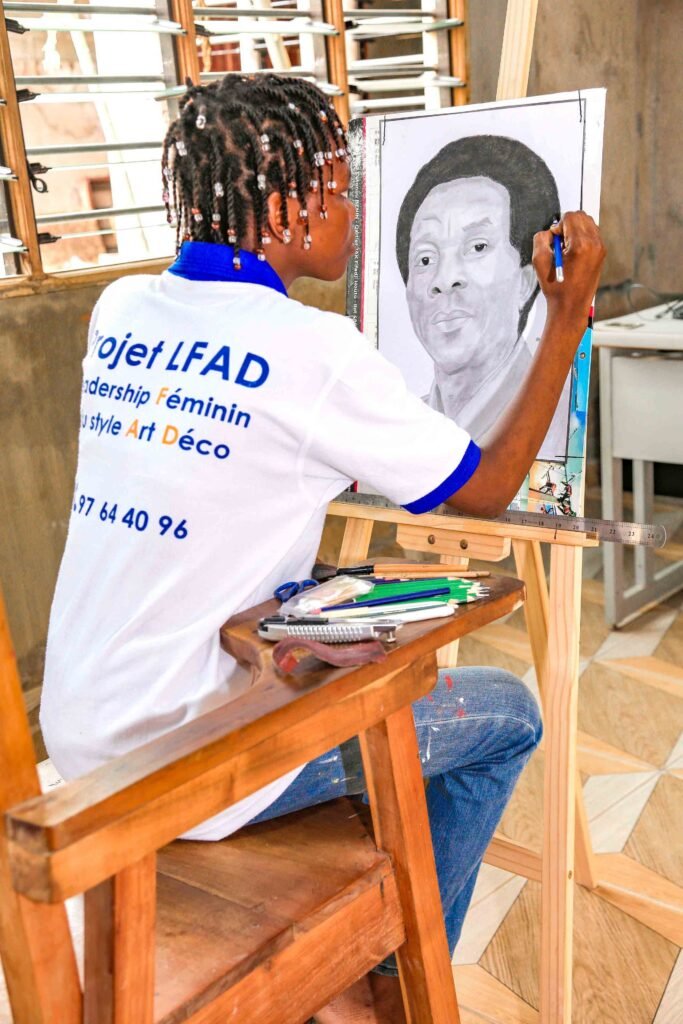
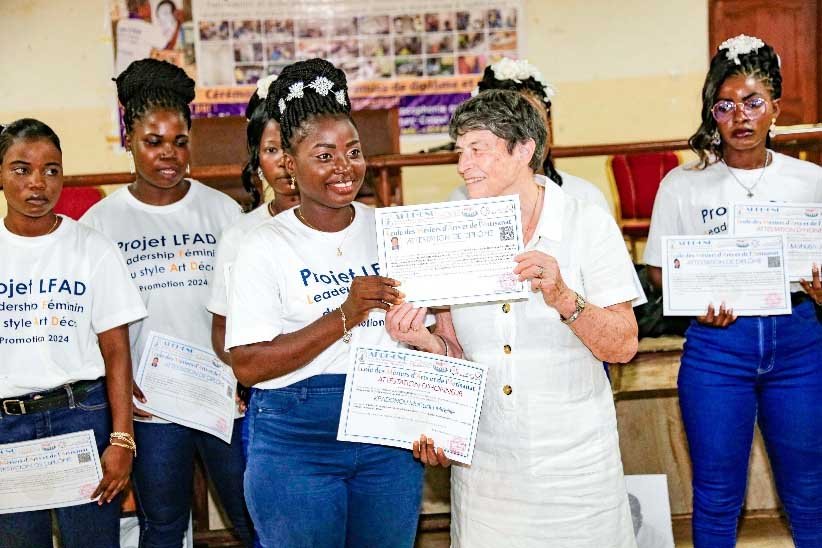
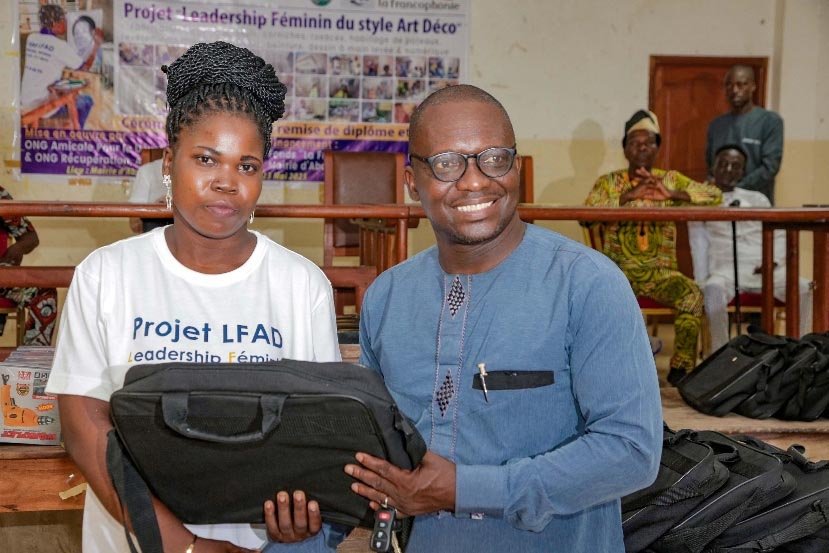
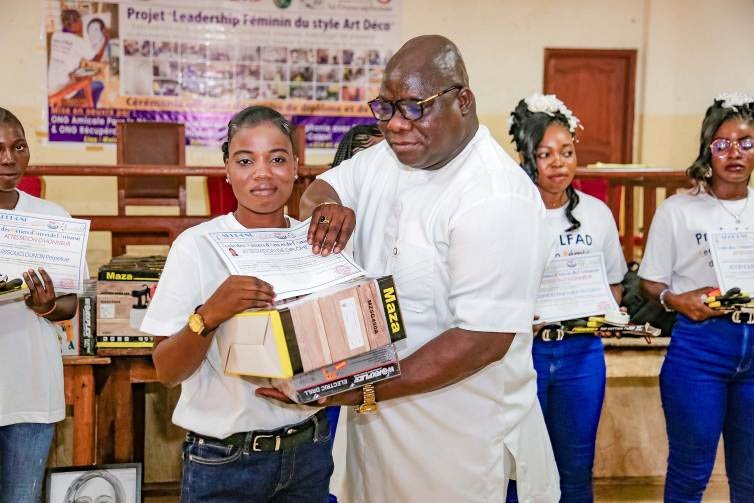
The “Art Deco Women’s Leadership (LFAD)” project was designed to train and socio-economically reintegrate 20 vulnerable young single mothers aged 16 to 25 from the municipality of Abomey-Calavi and surrounding areas. Targeting a particularly marginalized group—often out of school, lacking family support, and with limited access to professional opportunities—the project provided a structured, supportive, and professional environment for young women seeking stability and independence.
Launched in December 2023 with a call for applications, the project ultimately selected 25 young single mothers instead of the initially planned 20. Officially inaugurated on February 9, 2024, in the presence of local authorities and technical and financial partners, the program was built around an intensive 12-month training course, combining theory and practical experience in the fields of decorative arts (plasterwork, staff work, stucco, wall and floor coverings, decorative painting) and visual and digital arts (freehand drawing, graphic design, photography, and an introduction to digital marketing).
Drawing, in particular, occupied a central place in the training, both as an artistic skill and as a technical tool for interior design. Participants learned how to create perspectives, design sketches for decorative projects, and develop their own visual style, thereby strengthening their ability to offer customized services.
This multidisciplinary approach enabled participants to develop strong technical skills as well as cross-cutting competencies such as discipline, creativity, time management, professional communication, and self-confidence.
To strengthen their professional integration, the young women completed a four-month internship, from January to April 2025, with local artisans and businesses. This immersion in real work environments helped consolidate their practical skills and facilitated their integration into the local economy. The involvement of industry professionals not only ensured high-quality learning but also fostered lasting connections between the trainees and their socio-economic environment.
Today, the project has entered its post-training follow-up phase, aimed at supporting the long-term empowerment of beneficiaries. A personalized support mechanism has been established, including regular visits to workplaces, technical assistance, business management support, access to a mentoring network, and assistance in identifying market opportunities. This follow-up not only ensures sustained support but also enhances the resilience of the entrepreneurial initiatives led by these young women.
The initial results are highly encouraging. Several beneficiaries have already begun offering their services within their communities, including the design of small commercial spaces, home interior decoration, mural artwork, event photography services, and customized drawings for decoration and visual communication projects. This dynamism reflects their growing capacity for economic self-reliance, renewed self-confidence, and successful entry into sectors traditionally dominated by men.
Beyond individual empowerment, the project has generated multiplier effects at the community level. It has contributed to improving the social perception of single mothers, who are often stigmatized, by demonstrating that they can become agents of change and role models of success. The initiative has also helped reduce gender inequalities by promoting strong female leadership in technical and creative professions traditionally perceived as male domains.
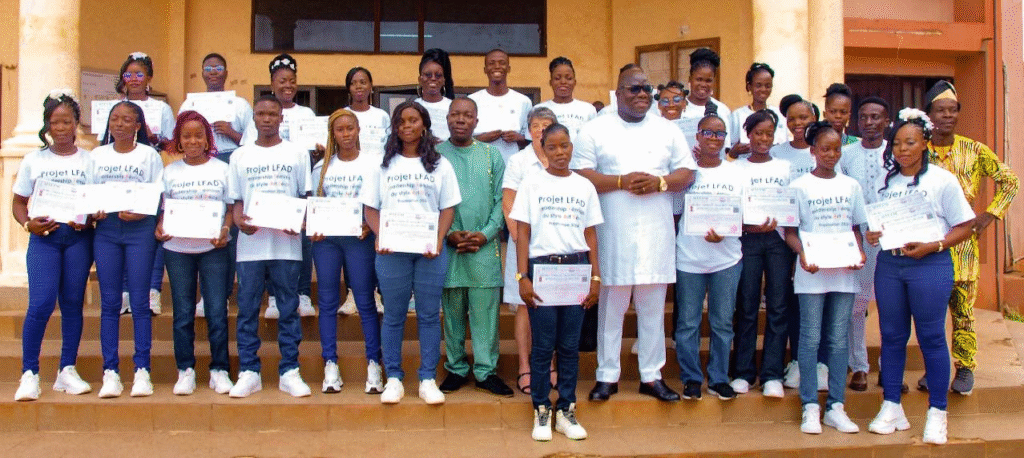
On May 23, 2025, an official graduation and start-up kit distribution ceremony, sponsored by the Mayor of Abomey-Calavi, Mr. AHOAUNDJINOU Evariste Angelo, marked the successful completion of the training program for the project’s young graduates. On this occasion, 25 young single mothers received their certificates in recognition of their commitment and achievements, symbolizing the culmination of a remarkable journey of personal and professional transformation.
Each beneficiary also received a professional start-up kit tailored to her area of specialization, including drawing, decoration, and interior design equipment, to facilitate the launch of her micro-enterprise and support her sustainable integration into the local economy.
This formal ceremony brought together several distinguished personalities, including Mr. AHOMADEGBE Amour Mathias, Departmental Director of Secondary, Technical and Vocational Education for the Atlantic Department, as well as Mrs. Marie-Paule THERY, representative of the French association AGIRabcd, demonstrating both institutional and international support for this initiative.
Beyond its ceremonial significance, the event represented a powerful moment of public recognition, celebrating the commitment, perseverance, and transformation of these young single mothers, who are now prepared to establish themselves as independent entrepreneurs and agents of change within their communities.
Thanks to the support of the International Organisation of Francophonie (OIF), the project’s main donor, which provided 79% of the funding through the “La Francophonie avec Elles” Fund, this initiative became a reality in a spirit of solidarity, social innovation, and sustainable development. It forms part of a broader effort to combat poverty, promote women’s entrepreneurship, and showcase local talent.
In summary, “Art Deco Women’s Leadership (LFAD)” goes far beyond a simple vocational training program. It is a social, economic, and cultural transformation initiative that places the dignity, potential, and creativity of young single mothers at the heart of local development. By integrating tools of expression such as drawing—considered here as a universal language of design and empowerment—the project opens new horizons for women who are often marginalized, providing them with the means to fully realize their potential.
School Education Support Project for Underprivileged Children in Yêvié and Zinvié Centre
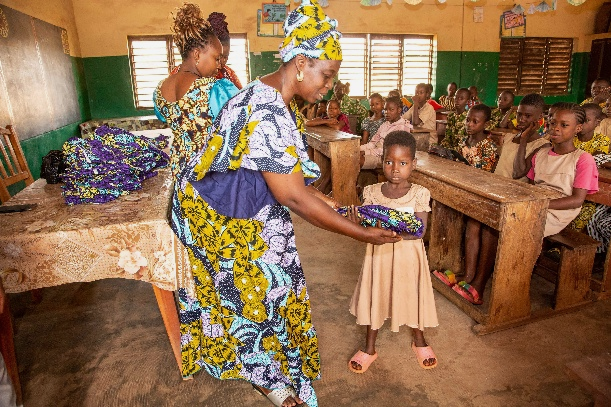
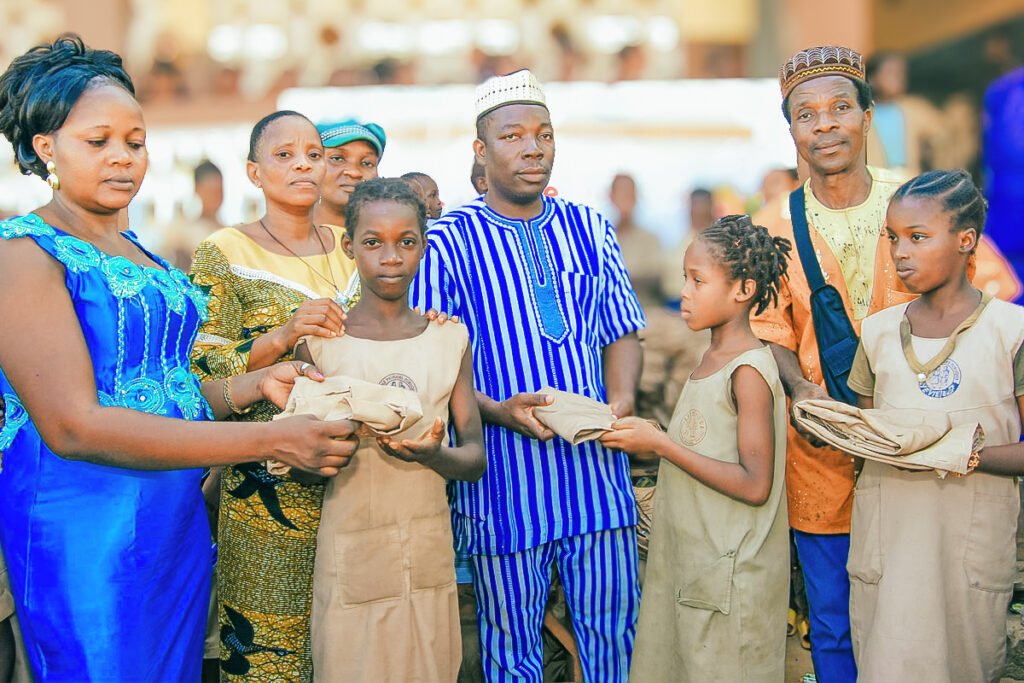
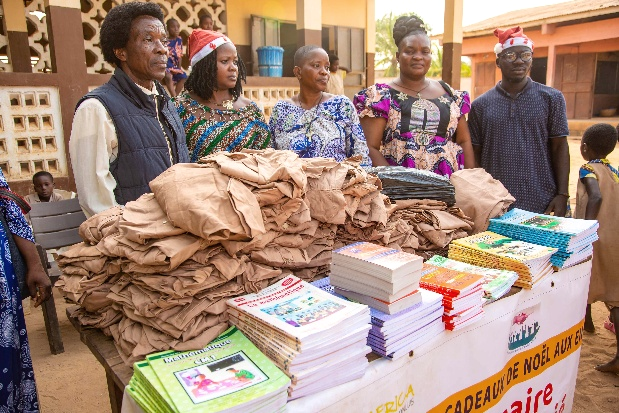
As part of its contribution to the Sustainable Development Goals (SDGs), on December 20, 2024, with the support of SORRIDI KONOU KONOU Africa ONLUS (Italy), the Amicale Pour le Développement Durable (APDD) and Récupération Amour Collaboration (RAC) provided essential donations to vulnerable children attending the public primary schools of Yêvié and Zinvié Centre, located in the Zinvié district of the municipality of Abomey-Calavi.These donations included school uniforms (khaki uniforms), clothing, books, notebooks, and other school supplies, aimed at improving learning conditions and reducing school failure, particularly among children from disadvantaged families.This initiative benefited more than 400 schoolchildren, strengthening their access to quality education and providing them with greater opportunities for a brighter future.The project forms part of a broader effort to combat educational inequalities and promote the well-being of the most vulnerable children.
Support for Disaster Victims in Ahomey-Lokpo
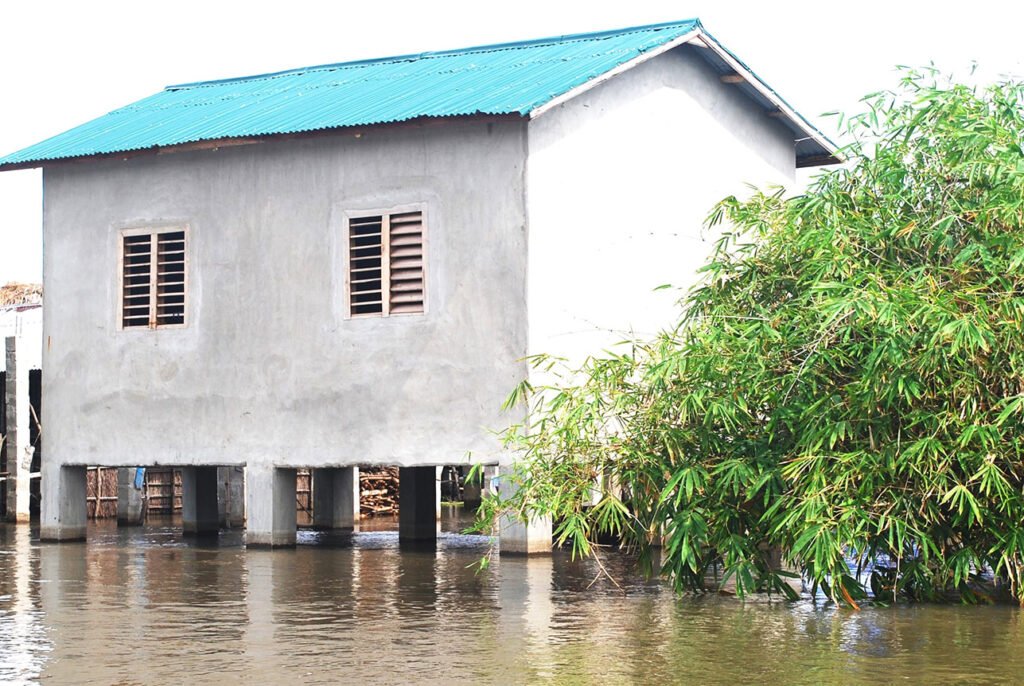
Following the devastating fire of February 27, 2023 that struck the community of Ahomey-Lokpo, the association SORRIDI KONOU KONOU AFRICA ONLUS, in collaboration with the NGOs RAC and APDD, immediately provided emergency assistance to the affected populations.This initial support included the distribution of food supplies and traditional clothing (pagnes) to meet the basic needs of the disaster-affected communities.On May 3, 2023, a delegation composed of representatives from SORRIDI KONOU KONOU AFRICA ONLUS, RAC, and APDD visited the site to hold discussions with the municipal committee of Sô-Ava regarding the reconstruction process.Following these discussions, the association financed the construction of three buildings to rehouse the displaced families, marking a crucial step in the recovery and long-term support of the affected community.
Eco Tomato Project
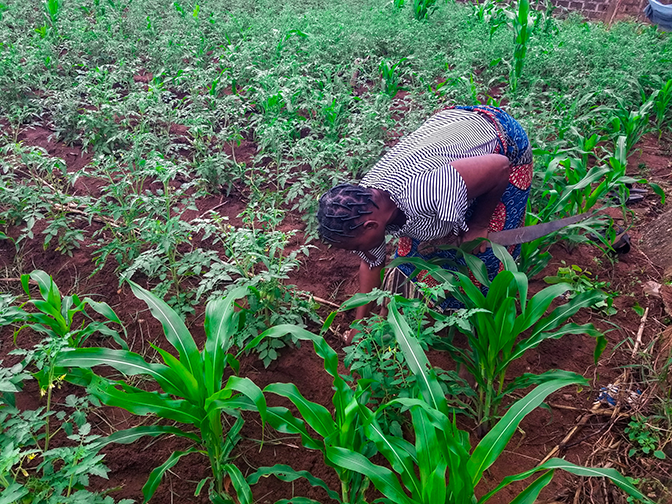

The EcoTomato Project aims to promote sustainable agriculture in Wawata, Benin, by introducing an intelligent automated irrigation system across 5 hectares dedicated to organic tomato farming.This project seeks to increase agricultural productivity while reducing the physical burden of work for women farmers in Wawata. It also encourages the adoption of organic and environmentally friendly farming practices. By providing training on modern techniques and sustainable land management, EcoTomato strengthens women’s skills and contributes to their economic empowerment. Embedded in a circular economy approach, the project values local resources and promotes a resilient and sustainable agricultural system to enhance food security in the region.
Pilot Phase: A First Success Despite Challenges
The EcoTomato project was successfully tested in Wawata on a 0.5-hectare plot, with technical support from the APDD NGO. Twenty-five women farmers were trained in organic tomato cultivation without the use of chemical inputs, using a manual irrigation system.
Although this labor-intensive approach (requiring more than five hours of daily work) presented significant challenges, the harvest demonstrated the feasibility of ecological farming adapted to the local context. This phase enabled participants to be introduced to agroecology while highlighting the need for technological support to ensure the sustainability of the model.
Scaling Up: Innovation and Empowerment
Building on these lessons, EcoTomato is entering an expansion phase that integrates a solar-powered automated irrigation system. This technological advancement will:
- Reduce the workload of women, freeing time for other economic activities
- Increase yields through optimized irrigation
- Preserve water resources, which are critical in the region
- Strengthen skills through training in sustainable agriculture
- Reinforce economic independence through collective commercialization
Financing and Sustainability
To ensure the success of this expansion phase, the project now requires additional funding. Several avenues are being explored, including partnerships with international cooperation institutions, applications to calls for proposals dedicated to sustainable agriculture, corporate social responsibility (CSR) sponsorships, and crowdfunding initiatives.
A detailed cost analysis (solar irrigation system, training programs, and related components) is currently underway to identify the most suitable funding sources and ensure the long-term sustainability of the project.
The active search for financial support represents a crucial next step in turning the ambitions of EcoTomato into reality.